
“I don’t have enough time.” This is the most common lie students tell themselves. Everyone has the same 24 hours—from the UPSC Topper to the student who failed. The difference is not in the amount of time, but in how they use it. In 2026, distractions are everywhere. One notification from Instagram, and suddenly 2 hours are gone. You feel busy all day, but when you sleep at night, you realize you achieved nothing. This is called “Fake Productivity.”
To crack exams like JEE, NEET, or SSC, you don’t need to study 16 hours a day. You need to manage your priorities. In this final guide of our series by DlyJobs, we will teach you the legendary Eisenhower Matrix. This is the exact method used by US Presidents and CEOs to make decisions in seconds. We will also discuss how to stop procrastination immediately.
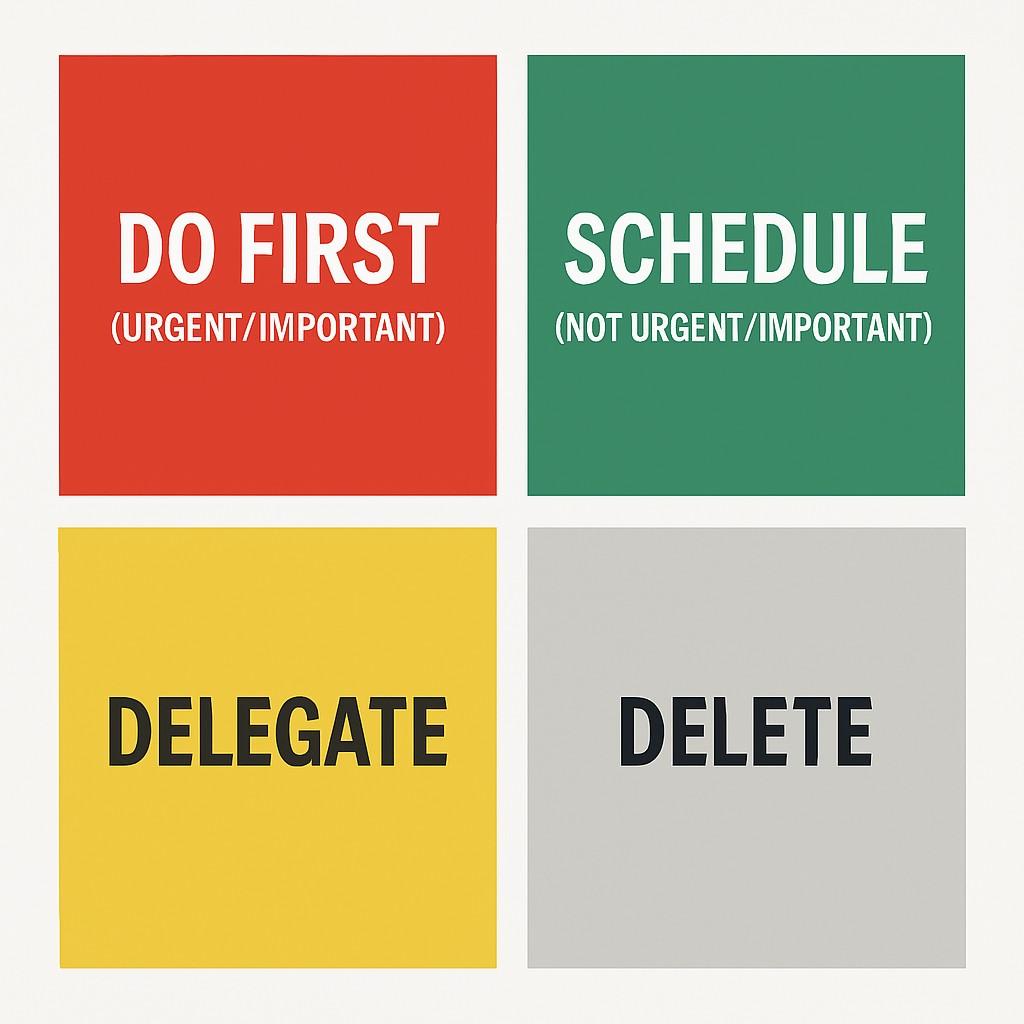
The Eisenhower Matrix: The Secret Weapon
Dwight D. Eisenhower (34th US President) said: “What is important is seldom urgent, and what is urgent is seldom important.” This matrix divides all your tasks into 4 Quadrants.
1: Urgent & Important (Do First)
These are emergencies. If you don’t do them, disaster will happen.
Example: Exam tomorrow, Application Form last date today, Medical emergency.
Action: Do it NOW.
2: Not Urgent but Important (Schedule It)
This is the “Topper’s Zone”. These tasks don’t have a deadline today, but they build your future.
Example: Making notes, exercising, reading NCERT books, learning a new skill.
Problem: Most students ignore this because it’s not “Urgent.”
Action: Decide a time and do it.
3: Urgent but Not Important (Delegate)
These are distractions disguised as work.
Example: A friend calling to gossip, replying to random emails, a match score notification.
Action: Ignore or minimize.
4: Not Urgent & Not Important (Delete)
These are “Time Killers.”
Example: Scrolling Reels, Watching Netflix for 4 hours, Video Games.
Action: Delete these from your life during exam days.
The “Eat The Frog” Technique
Mark Twain famously said: “If it’s your job to eat a frog, it’s best to do it first thing in the morning.”
What it means:
Identify your hardest subject (e.g., Maths or Physics).
Study it first thing in the morning (6 AM – 9 AM).
Why? Your brain is fresh, and willpower is high. Once the hardest task is done, the rest of the day feels easy.
How to Create a Practical Study Timetable
Most students make a “Ideal Timetable” (e.g., “I will study 12 hours”). This fails in 2 days.
The “Block Method”: Instead of listing tasks, create time blocks.
Deep Work Block (3 Hours): Phone switched off. Only study. (Q2 tasks).
Shallow Work Block (1 Hour): Checking emails, replying to messages, organizing notes.
Leisure Block (1 Hour): Guilt-free enjoyment (Music, Walk).
Note: If you don’t schedule “Fun Time,” your brain will rebel and force you to procrastinate.
The 2-Minute Rule (Stop Laziness)
If a task takes less than 2 minutes to do, do it immediately.
Example: Washing your coffee mug, putting your book back on the shelf, replying to an important text.
Result: This keeps your mind clear of “small clutter” so you can focus on big exams.
Digital Detox: The Need of the Hour
You cannot manage time if your phone is managing you.
Turn off Notifications: Keep only Call/SMS active. Turn off WhatsApp/Instagram notifications.
Grey Scale Mode: Turn your phone screen to “Black & White” (in Accessibility settings). This makes the phone boring and reduces addiction.
My Personal Advice (Final Verdict)
Time management is not about squeezing more work into the day. It is about knowing what NOT to do. If you spend 4 hours on Instagram and then say “I don’t have time for revision,” you are lying to yourself. Use the Eisenhower Matrix. Focus on Quadrant 2. Your future is hidden in the things you do when no one is watching.
Start today Not tomorrow For more study strategies and career guides, this was the final article of our series at DlyJobs. Keep learning!
FAQs
Q1: How many hours should I study daily?
Quality > Quantity. 6 hours of focused study is better than 12 hours of distracted study.
Q2: How to handle sleepiness while studying?
Follow the Pomodoro technique (25 min study + 5 min break). Also, avoid heavy meals (rice/roti) before studying afternoon.
Q3: Is it better to study at night or morning?
It depends on your “Chronotype.” However, for exams, Morning Study is recommended because exams usually happen in the morning shift, so your brain should be active then.

Nasir
Expert content creator dedicated to providing authentic educational and career updates.